


Determine objective refraction across a wide range of patient conditions.
Autorefractometers are essential diagnostic devices used by eye care professionals to objectively assess refractive errors and support the determination of the optimal prescription for corrective lenses.
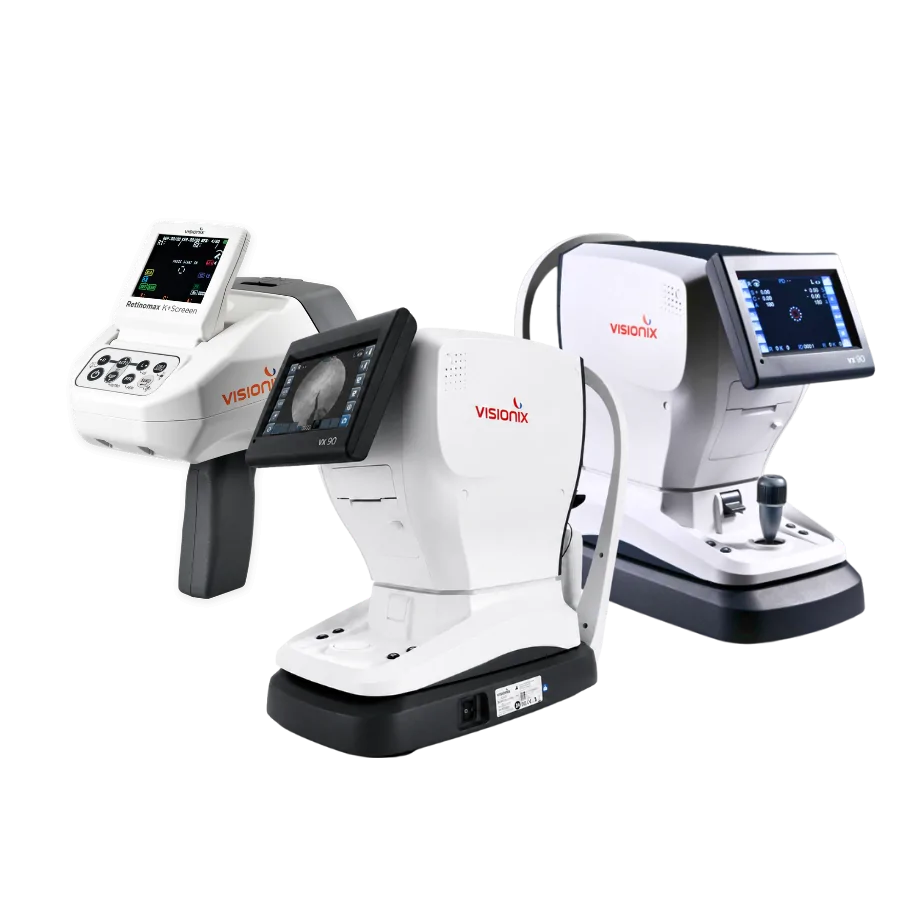

Autorefractometers quickly and non-invasively measure eye refraction for accurate prescription, benefiting eye care professionals and their patients.

Autorefractometers enhance efficiency with advanced features such as automatic eye recognition, a fully automated measurement workflow, and a color touchscreen display. These features streamline the refraction process, reduce measurement time, and enable professionals to see more patients.

Autorefractometers provide objective measurements, leading to accurate and consistent results, without subjective factors. This can improve patient outcomes.
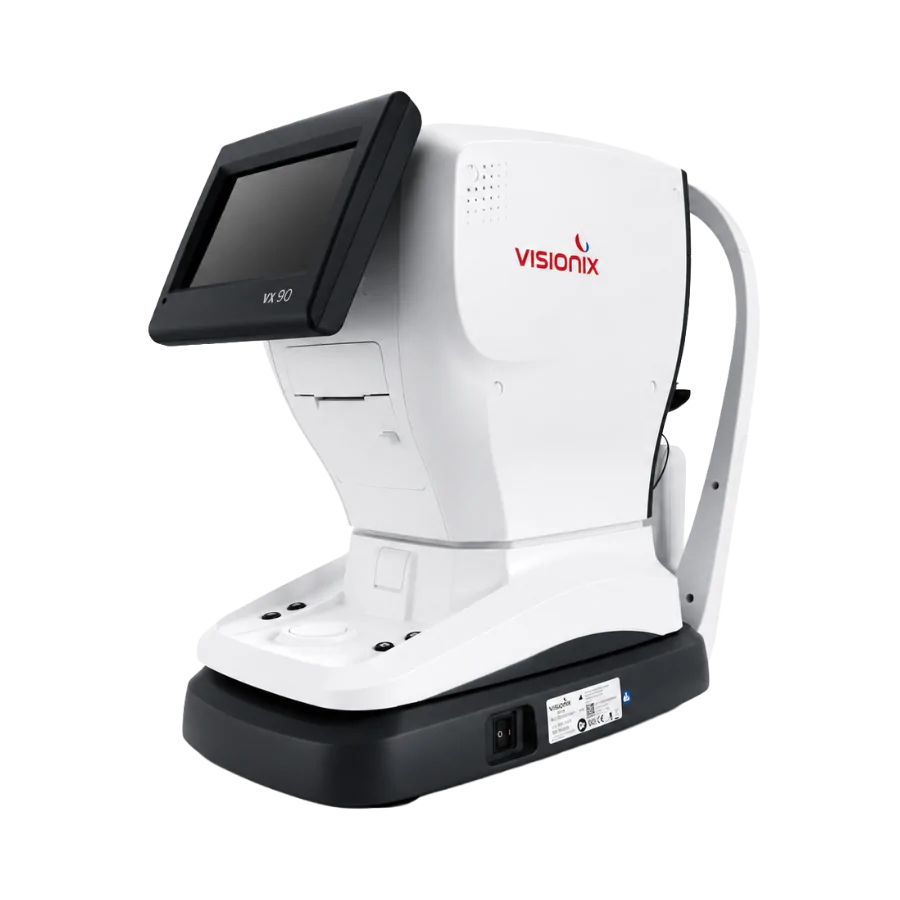
Automatic version
The fully automatic version of VX90 is an ophtalmic diagnostic device with refraction, keratometry and corneal radius functionalities. Delivering fast, fully automated measurements with exceptional accuracy and repeatability.

Manual version
The VX 90 is an ophtalmic diagnostic device with refraction and keratometry functionalities as well as accurate of cataracts. A moving fixation target with auto fogging allows the patient to fully desaccommodate in order to get the patient refraction in any conditions.

Retinomax products offer a wide range of refraction measurements with high mobility, stability and accuracy, that have been recognized worldwide for years.

Retinomax products offer a wide range of refraction measurements with high mobility, stability and accuracy, that have been recognized worldwide for years.

Retinomax products offer a wide range of refraction and keratometry measurements with high mobility, stability and accuracy, that have been recognized worldwide for years.

Retinomax products offer a wide range of refraction and keratometry measurements with high mobility, stability and accuracy, that have been recognized worldwide for years
| VX 110 | VX 120+ | VX 120+ Dry Eye | VX 130+ | VX 650 | |
|---|---|---|---|---|---|
| AR-K based WF. | |||||
| AR-K | ✔️ | ✔️ | ✔️ | ✔️ | ✔️ |
| Occular Aberro. | ✔️ | ✔️ | ✔️ | ✔️ | ✔️ |
| Retro | ✔️ | ✔️ | ✔️ | ✔️ | ✔️ |
| Corneal Topograph | ✔️ | ✔️ | ✔️ | ✔️ | ✔️ |
| Non Contact Tonometer | ✔️ | ✔️ | ✔️ | ✔️ | |
| Scheimpflug Camera | ✔️ | ✔️ | ✔️ | ✔️ | |
| Pachymetry | ✔️ | ✔️ | ✔️ | ✔️ | |
| Full Eye Tracking | ✔️ | ✔️ | ✔️ | ✔️ | ✔️ |
| Back surface of the cornea | ✔️ | ✔️ | |||
| Remote Access | ✔️ | ✔️ | ✔️ | ✔️ | ✔️ |
| Colour camera | ✔️ | ✔️ | |||
| Dry eye | ✔️ | ✔️ | |||
| NBUT | ✔️ | ✔️ | |||
| Efron classification | ✔️ | ✔️ | |||
| Tear meniscus value | ✔️ | ✔️ | |||
| Fundus Camera | ✔️ |